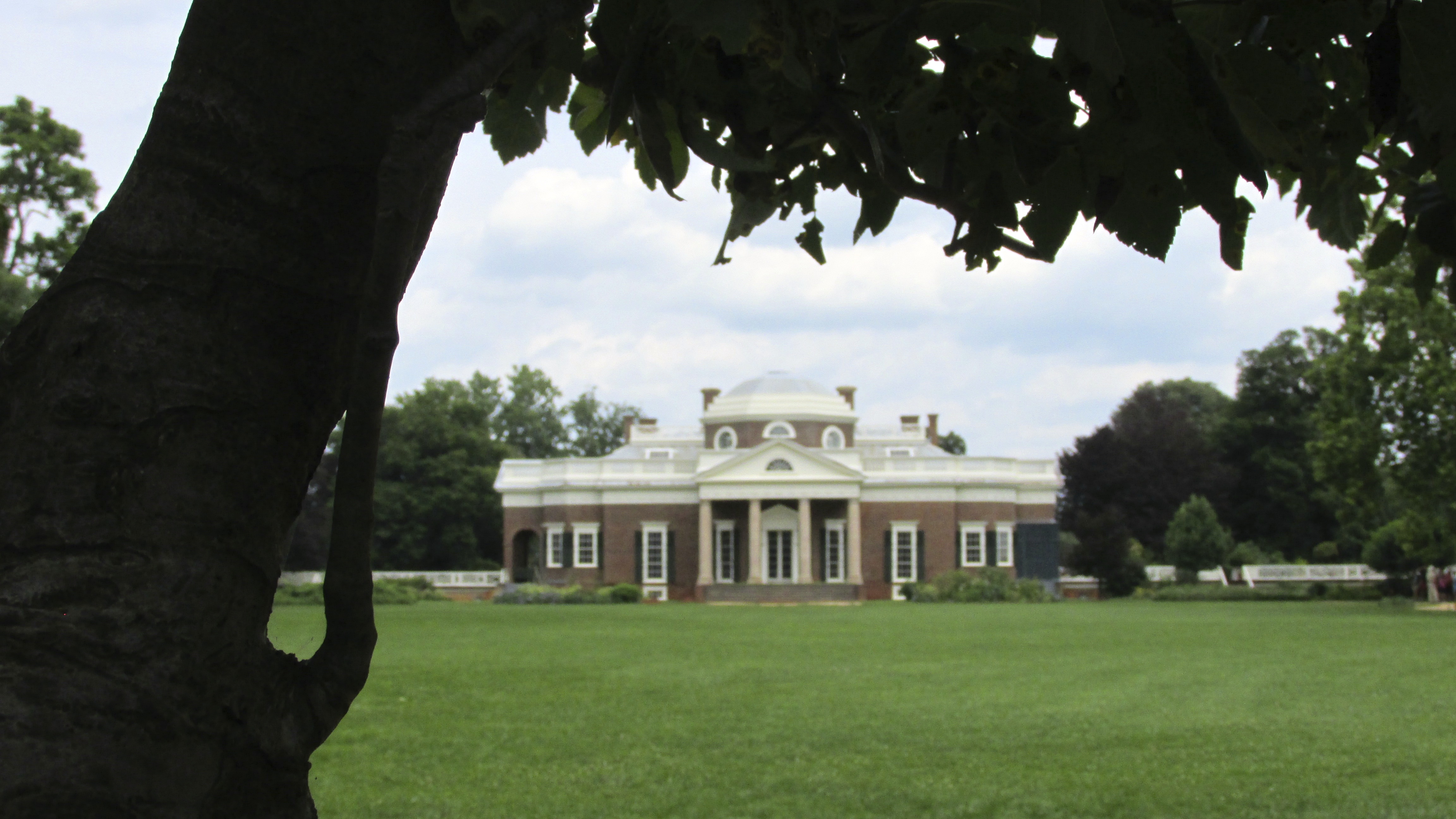


The Iwo Jima Memorial in Arlington, VA is an emotionally moving statue, which is impressive considering its massive size- the figures alone are 32-feet high. But it’s even more touching if you happen to be there when veterans arrive courtesy of Honor Flight. I was lucky enough to experience that this weekend.
This amazing program flies US vets from around the country to visit Washington and the memorials dedicated to the wars they fought. Many of these vets are in their 80s and 90s. I get choked up every single time I’m at a memorial and see these men and women experiencing the respect of their country. It’s not only the statues and quotes, it’s the other visitors- from kids to seniors- who stop and thank them for their service, shake their hands, salute them, and connect for a moment with the strong, proud serviceman or woman that still exists inside an often elderly exterior.
I’m not sure if it’s the kindness and gratitude of strangers or the reminder that we are quickly losing the human element, the humanity, of these important markers of American history that I find the most emotionally gripping. But I feel lucky to witness and participate in these exchanges.
A few photos from the Memorial and of an Honor Flight with vets from Rochester, NY:


While the Memorial depicts Joe Rosenthal’s Pulitzer Prize-winning photo of five Marines and a Navy hospital corpsman raising the American flag after the eponymous World War II battle in the Pacific, it honors all Marines who have given their lives throughout US history.
More info on Honor Flights: https://www.honorflight.org

Although it feels more like winter in Washington this week, the beginning of spring marks the annual countdown to the frothy pink explosion of cherry blossoms around the Tidal Basin.
A little backstory: in a gesture of friendship, Japan sent 2,000 cherry trees to the US as a gift in 1910. Nice thought. But the trees were infested with roundworms and insects and burned (fuller and interesting history at: http://www.history.com/news/the-drama-behind-100-years-of-washingtons-cherry-blossoms).
Another batch of 3,000 arrived in 1912. Those worked. First Lady Helen Taft and the Japanese Ambassador’s wife planted the first 2 trees on the north side of the Tidal Basin. Further horticultural exchanges, festivals, parades, concerts, and crowned princesses followed. Bloom Watch is now a local tradition.
Since I’m celebrating- and obviously promoting- the release of my book Lipstick Brigade: The Untold True Story of Washington’s World War II Government Girls, I thought I’d share some fun photos of residents, tourists, Government Girls and servicemen visiting the cherry blossoms in wartime Washington (all thanks to the Library of Congress).




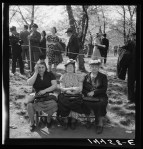
After the Japanese bombing at Pearl Harbor, angry vandals hacked down four of the symbolic trees. Added security kept the rest of the trees safe throughout the war.
There are now about 3,750 cherry trees (a mix of at least 10 different species) surrounding the Tidal Basin. Parking is a nightmare, walking around is difficult as every other person stops to take a picture, and the weather is annoyingly unpredictable. But when you’re engulfed in hundreds of thousands of pink petals that offer perfectly framed glimpses of the DC’s famous monuments, it’s definitely worth the effort.
This year the trees are expected to be in full bloom (meaning about 70% of the blossoms are open) from April 11th thru the 14th.
The National Park Service offers maps and trail guides you can download here: http://www.nps.gov/cherry/cherry-blossom-maps.htm
Find a full calendar of events from the official festival website: http://www.nationalcherryblossomfestival.org/category/events/

Today, D.C. is digging out from its first snowfall of the year. We got about 4”- a bit more than expected- and it’s created havoc for schools, roads, and airports. Yes, yes, Washingtonians are called wimpy when it comes to dealing with snow. I personally think cancelling everything to stay home with hot chocolate and Netflix is a perfect way to deal with it, but that only adds fuel to the reputation.
I figure this was a good time to share some terrific photos of Washington during the snowstorm of January 1922. The city registered 28” of snow between January 27th &28th. These great pictures showing a heartier generation ice skating by the Lincoln Memorial, commuting through snowdrifts, and slogging down Pennsylvania Avenue in front of the Old Post Office are from the Harris & Ewing collection at the Library of Congress.

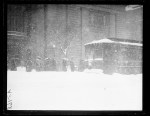
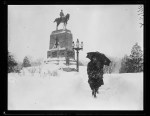

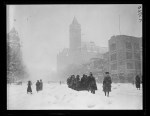


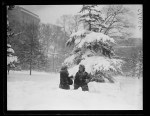
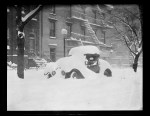
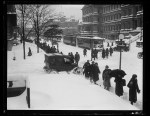

This was also called the Knickerbocker Storm. On Saturday evening, January 28th, just after 9pm, over 400 people were gathered to watch the silent film Get-Rich-Quick Wallingford at the Knickerbocker Theater in Adams Morgan. During intermission, the roof split in the middle, crashing through the balcony, and flattening portions of the brick walls onto the audience and musicians working in the orchestra (including Joseph Beal, the first violinist- and WWI veteran- who had been married just 3 days earlier). Ninety-eight people died in the collapse and 133 were injured. Rescue efforts were hampered by snow drifts up to 16 feet high.

Documentary filmmaker Jeff Krulik included this newsreel footage of the disaster in his film Twenty-Five Cents Before Noon:
For more info on the Knickerbocker:
A 2008 Washington Post article on the collapse: http://voices.washingtonpost.com/capitalweathergang/2008/01/the_great_knickerbocker_snowst_1.html
Lyman v. Knickerbocker Theatre Co., a case brought against the theater by the estate of one of the victims:
https://casetext.com/case/lyman-v-knickerbocker-theatre-co

Manhattan’s Times Square is now packed with people almost every day of the year. The pedestrian plaza, created in 2009 but permanently and officially opened in 2013, has become one of New York City’s biggest tourist attractions. It draws an estimated 39 million people a year. If you’re trying to maneuver your way through the area, it often feels like it draws over 39 million people a DAY.
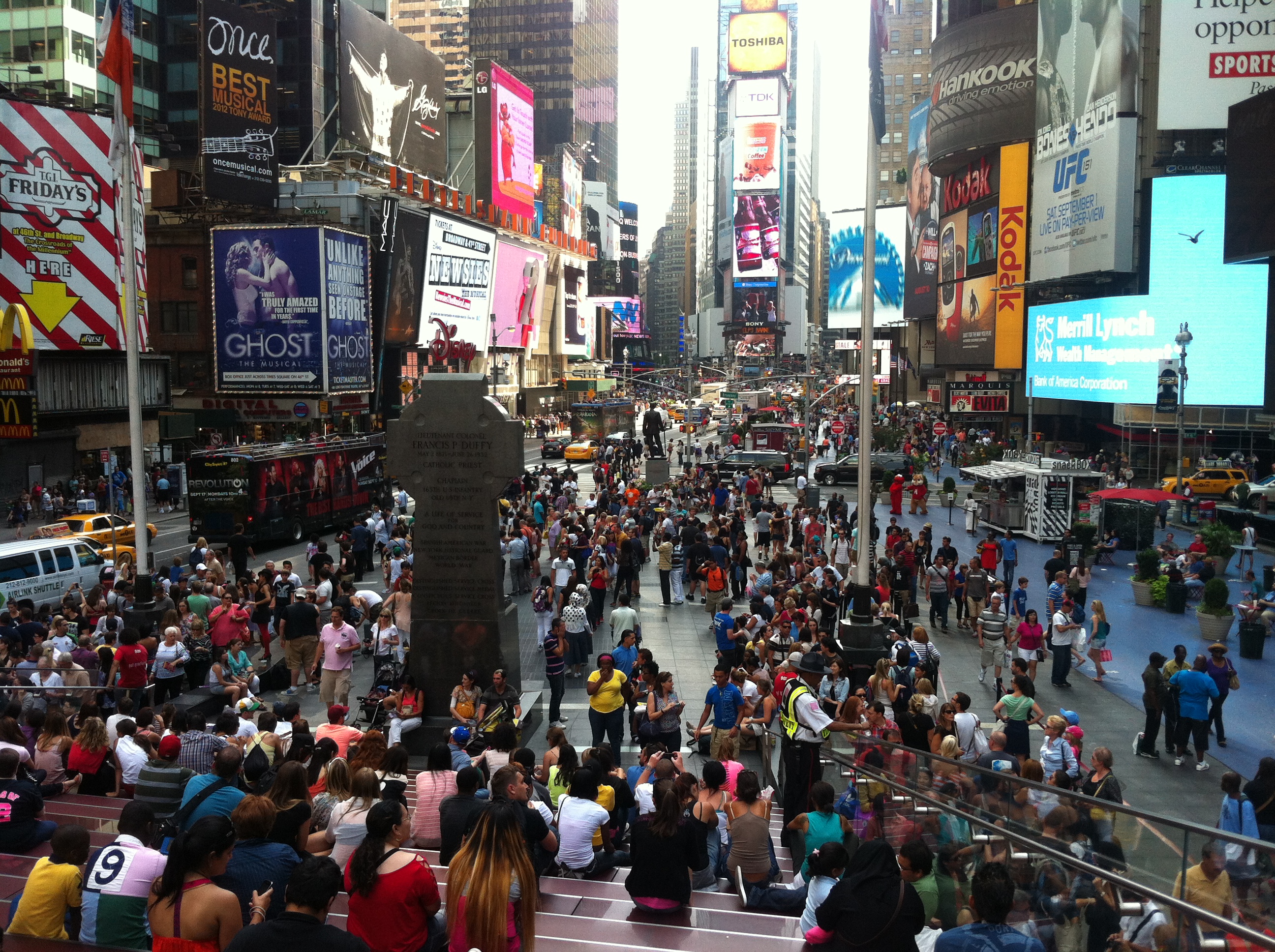
I’m not a fan. But I’ll save that diatribe for another post.
As New Year’s Eve approaches and more than one million semi-sober partiers flock to watch the ball drop in Times Square, it’s more fun to take a quick look at how the tradition got its start. In 1904, about 110 years before questionably legitimate cartoon characters started aggressively charging families for a photo, Longacre Square was renamed for the opening of the New York Times distinctive new headquarters. That same year a New Year’s Eve tradition was born.

This great video shows how the celebrations evolved over the years:
For some interesting additional info, check out:
A Curbed NY article on how NYC has become more pedestrian friendly over the last 25 years:
http://ny.curbed.com/tags/pedestrian-plazas
A NY Times piece on “The Lives Behind Times Square Cartoon Characters”:
A longer history of Times Square as the entertainment center of NYC via the New York Architecture site:

This is a great article about how a group of upper-class New Yorkers helped turned the focus of America’s Christmas celebrations towards kids– and formed a near universal image of Santa Claus in the process:
http://edition.cnn.com/2014/12/22/living/real-santa-claus/?c=&page=1
Here’s my first video in the Scandalous Washington series. They’re based on talks I created and give in D.C.
The nation’s capital is almost as famous for its scandals as it is for its politics. Using some of Washington’s most notorious public scandals- including suicide, murder, slavery, spies, and riots- I’ll explore over 200 years of the city’s rich and colorful history.
Hope you enjoy these as much as I do!
AND FOR MORE SCANDALOUS WASHINGTON POSTS GO TO: http://SCANDALOUSWASHINGTON.COM
Considering that the Folger Shakespeare Theatre combines two of my favorite things- history and theater- I can’t believe that it took me this long to make my way to this brilliant time warp on Capitol Hill. Outside of the Globe in London (which is a giddy pleasure to any theater nerd- check it out at http://www.shakespearesglobe.com ), the Theatre’s intimate half-timbered stage with dark wood paneling and tiered balconies is probably the closest I’m going to get to feeling transported back to an Elizabethan playhouse.

The Elizabethan Theatre
The Theatre opened in 1932 as part of the Folger Shakespeare Library, the world’s largest collection of Shakespeare materials. Yes, really, the largest in the world- over 275,000 books. There’s a great new biography about Henry Clay Folger and his wife Emily Jordan Folger, who spent their lives and money carefully collecting manuscripts and founding the library (you can read a review of Collecting Shakespeare here: http://goo.gl/P65Dyn). It’s a mecca for Elizabethan and Renaissance scholars, but just sitting in the gorgeous theatre brings the history of the period alive in a much more visceral experience.
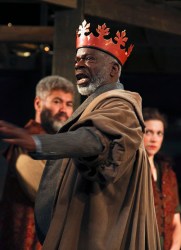
Joseph Marcell as King Lear
In a perfect confluence of theatrical form following function, I saw King Lear starring Joseph Marcell (the butler on The Fresh Prince of Bel-Air– yup, he always seemed more talented than his sitcom material). It’s a traveling production that originated at the Globe. It’s a fantastic and energetic performance, and I’m certainly not an expert on Shakespeare in general or King Lear in particular, but I found a few of the character and interpretative choices questionable.
Some of the actors came out before curtain to interact with the audience. I guess it’s supposed to be inclusive and make us feel like we’re getting a behind-the-scenes peak into the magic of performing or something. But I always find that awkward. I don’t want to make small talk with a bubbly, cheerful working actress. I want to enjoy a ruthless, cold-hearted Reagan. On stage. Not leaning over my lap.
Using a small number of actors in double, triple or even quadruple roles also made it momentarily distracting as I tried to recall which character was supposed to be speaking. And one scene in which the actor playing both Edmund and Oswald runs back and forth across the stage putting on and removing a hat emphasized the gimmick over the content.
However, the most jarring creative choice of the show was the addition of music between scenes or as interludes. Since the play is over 400 years old, I don’t think it’s a spoiler to say that it ends badly for Lear and his family. Most of the main characters lay dead on the stage. Instead of giving the audience time to feel the impact of the story- the heartbreakingly empty victory of the remaining loyal and just characters- the actors slowly and dramatically rise and… break out in an Irish jig! It’s entertaining but disconcerting. It didn’t feel right to walk out of Lear cheerfully humming.

Decorative freeze of King Lear on the outside of the Shakespeare Folger Library
It’s not a subtle, nuanced interpretation. Most scenes are played at a fever pitch that can often become shrill and generates lots of sustained shouting (which led to lots of inadvertent spitting by the actors making me glad I was not sitting closer to the stage).
For all that nitpicking, I thought this was a terrific production with an excellent cast (Bethan Cullinane’s Fool and Alex Mugnaioni’s Edgar/Duke of Cornwall were especially compelling).
It’s worth a trip to the Folger Theatre even if you can’t handle the thought of sitting through a Shakespeare play. Either take a tour to see the space (as well as the library and garden) or buy tickets to one of the other plays, concerts, lectures or festivals offered throughout the year (http://www.folger.edu/whatson.cfm). I finally found my way to this unlikely Elizabethan oasis across from the Capitol and will definitely be back.


